
Net direct tax collection grew 21 per cent to over Rs 4.62 lakh crore so far this fiscal, on higher advance tax payment by corporates.

What is digital house arrest? It is a tactic cybercriminals use to confine victims to their homes and scam them, explains Tamal Bandyopadhyay.

While payments banks surely lose money, their operating ratios were looking better in 2017-18 compared to the year before. This implies that as customer volumes start picking up, the business models may perk up too, says R Jagannathan.

Apart from the Google team led by AI scientist Manish Gupta, the company will also partner with the research community across the country to focus on tackling challenges in fields like healthcare, agriculture, and education.

Walmart-owned digital payments firm PhonePe has decided to halt its proposed acquisition of Goldman Sachs- and Xiaomi-backed ZestMoney, a Bengaluru-based buy now, pay later (BNPL) platform. The deal, which was poised to fetch anywhere between $150-200 million and $300 million, has hit a snag over lapses in due diligence, disagreements over valuation, sustainability of the business, and shareholding structure of ZestMoney, according to people familiar with the matter. The collapse of the deal is also being attributed to a slowdown in the financial technology (fintech) sector in the midst of a funding winter, difficult regulatory environment, and macroeconomic uncertainty, informed other sources.

Absence of comprehensive data protection and privacy laws will be barriers in the government's digitalisation drive.

It's time the government accepts that Digital India is too distant.

According to its DRHP filed in 2010, the company's net worth was just Rs 140 crore. Its total income for the financial year 2009-10 stood at Rs 119 crore and it had a net profit of Rs 16 crore. In sharp contrast, at the end of March 2021, Paytm's networth was Rs 6,535 crore and total income stood at Rs 3,187 crore.

Google on Tuesday began reinstating about 250 Indian apps it had delisted from its Play Store over a billing dispute as it caved in to government criticism, but the squabble may not yet be over.

More than 100 million new users added in just one year; mobile internet usage seen as next frontier.
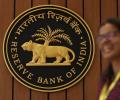
For five consecutive policy reviews in 2023, the Reserve Bank of India (RBI) chose to hold rates, citing inflation threat. And when the prices did cool off a bit, it reminded all about the target to get the headline consumer price inflation at 4 per cent and the risks from food inflation. Heading into the new year, all eyes are on when RBI will cut the rates, especially after one of the Monetary Policy Committee (MPC) members stressed on the need for such an action in the face of the US Federal Reserve's guidance for easing rates.
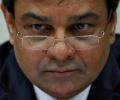
Under Urjit Patel, the then RBI Governor, the central bank had a habit of making complete about-turns on various issues, including electoral bonds and digital payments, former finance secretary Subash Chandra Garg said in his book titled 'We Also Make Policy: An Insider's Account of How the Finance Ministry Functions.' Citing some instances of about-turns by the then RBI Governor Patel, Garg in his book said, RBI had done so on the electoral bond issue and it had so in case of setting up of Payments Regulatory Board (PRB). RBI also made unilateral decisions like ordering complete data localization for participation in the payment system, Garg wrote in the book which will hit the stands on October 1.

With the Reserve Bank of India's (RBI) extended deadline coming to an end, there will be no automatic recurring payment for various services including recharge and utility bill as the additional factor of authentication (AFA) will become mandatory from Friday. On December 4, RBI had directed all banks including RRBs, NBFCs, and payment gateways that the processing of recurring transactions (domestic or cross-border) using cards or Prepaid Payment Instruments (PPIs) or Unified Payments Interface (UPI) under arrangements/practices not compliant with AFA would not be continued beyond March 31, 2021. As part of risk mitigation measures, RBI announced this step to bolster safety and security of card transactions.
.jpg)
Of the 11 licence holders, only eight remain in the fray as concerns about profitability and rising competition are making them think twice before jumping in.

Fintech players are customising solutions for rural markets and helping SMEs learn how to use the services

Infosys Ltd on Thursday reported a 4.7 per cent rise in the September quarter net profit and raised revenue guidance after broadbased growth. Net profit of Rs 6,506 crore in July-September was up 4.7 per cent when compared to Rs 6,212 crore earnings in the same period last year. It was 2.2 per cent higher quarter-on-year, according to a company statement.

The RBI said the payment systems landscape will continue to change with further innovation and entry of more players which is expected to ensure optimal cost to the customers and freer access to multiple payment system options.

While mobile wallets are still busy exploring the multiple facets of interoperability, experts believe that bringing in new customers would be costly affair and the numbers of new wallet users might not see a major hike anytime soon.

An initiative of Nandan Nilekani's EkStep Foundation, people+ai on Tuesday unveiled its vision for the future of Artificial Intelligence (AI) in India, dubbed 'Adbhut India' (Amazing India). It aims to harness AI as a powerful tool to enhance the lives of all Indians. The event marked the rollout of several initiatives by people+ai that are focused on discovering, demonstrating, and disseminating population-scale AI use cases for India.

The Indian retail segment has its own uniqueness and the country is one of the most exciting markets globally that is poised to grow to over a trillion dollars by 2025, according to Walmart Inc President and CEO Doug McMillon. Speaking at the Converge@Walmart event, McMillon noted that given the diversity of the Indian market, the company has to "think local and execute locally". "India is such a diverse market, it's not one country in some ways and so we have to think local and execute locally, and it has its own rules, and so, we've got to comply with those rules," he said.

The RBI refuses to classify a cryptocurrency as an asset since it doesn't have future cash flow and its value is always fluctuating because of speculation. There is also no consumer protection, observes Tamal Bandyopadhyay, and hence the e-rupee trial run.

The year 2021 could turn out to be India's year of IPO with the domestic unicorns through their public issues setting "domestic stock markets on fire and global investors in a frenzy", an RBI article said on Tuesday. The successful Initial Public Offerings (IPOs) by new age companies in the recent months are a reflection of bullishness about Indian technology, it said. "...growth impulse is igniting financial markets. 2021 could well turn out to be India's year of the IPO.
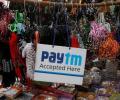
Paytm's pre-IPO investors, which include likes of Warren Buffet's Berkshire Hathway, SoftBank and Alibaba, do not seem to be in a hurry to exit India's leading digital payments brand as they continue to believe in its long-term prospect, analysts said. On Tuesday, 86 per cent of Paytm's shares became free to trade after the end of the lock-in period, allowing investors to sell shares that haven't yet been allowed onto the market. Market participants have been speculating on Paytm, post-expiry of lock-in for pre-IPO investors.

As Indians scrambled to exchange the banned notes for new currency, Paytm, Sharma's digital payments startup, went on a promotional spree, inviting Indians to start using Paytm's digital wallet to pay for everyday goods and services.

If Sebi and RBI remain quiet about this brazenly illegal activity, will someone in the finance ministry or the NITI Aayog take a closer look, asks Debashis Basu.

Everyday consumerables, such as grocery and order-in food items are the key buyout sector, analysts say, and a major reason for kirana stores' digitisation push.

While most banks in India store all this data on Indian servers in their core banking systems, the current directive addresses new-age payment and fintech companies operating in the space

Unbanked customers can expect easier access to banking.

'Given the emerging trends, it may be time for India to embrace digital banking,' notes Pradipta Bagchi.

Balance-level delinquencies in the credit card segment saw a 17 basis points (bps) year-on-year (Y-o-Y) rise in the quarter ending June 2024 (Q1FY25). In all other credit segments, including personal loans, delinquencies declined even as retail credit growth moderated, consequent to banks tightening the supply of credit to the unsecured segments, a report by TransUnion CIBIL said on Monday. Data shows that balance-level delinquencies, measured in terms of 90 days or more past due, in the credit card segment stood at 1.8 per cent in Q1FY25- highest among all other credit segments.

ICICI Bank says it blocked all UPI transactions made through PhonePe due to security concerns.

USAID looks forward to working with each to make financial inclusion a long-lasting and sustainable reality in India.

Prime Minister Modi also made a veiled reference to China, saying the global order is based on the respect for the principles of the UN Charter, peaceful resolution of disputes, and respect for sovereignty and territorial integrity.

'A mule operates someone else's account to transfer illegal money.'

Experts say the new guideline is likely to hurt foreign players more, especially card companies such as Visa, MasterCard and American Express who process and store credit card transaction data outside of India.

Whether one likes it or not, services constitute the value-addition sector that the country has to build on, using its comparative advantage in infotech and related skills, suggests T N Ninan.

From Singapore to Almora, Abhishant Pant has survived without cash, and he wants to continue in that state all his life.

Things are expected to change dramatically in a few years for urban consumers.

Ask rediffGURU and tax expert Mihir Tanna your income tax-related questions.

Modi said Ramakrishna Paramhansa was one saint who had a clear vision of her and his disciple Swami Vivekananda had also felt the spiritual vision about the goddess, which infused into him extraordinary energy and strength.
